Monday, March 31, 2025

How to Use Git and Git Bash Locally: A Complete Guide


How to Use Git and Git Bash Locally: A Complete Guide
https://itinai.com/how-to-use-git-and-git-bash-locally-a-complete-guide/
How to Use Git and Git Bash Locally: A Complete Guide


Using Git and Git Bash Locally: A Business Guide

Table of Contents

  • Introduction
  • Installation
    • Windows
    • macOS
    • Linux
  • Basic Git Commands
  • Git Configuration
  • Git Workflow
    • Creating a Repository
    • Committing Changes
    • Branching and Merging
    • Remote Repositories
  • Troubleshooting
  • Best Practices
  • Conclusion

Introduction

Git is a powerful version control system that allows teams to track code changes, collaborate effectively, and maintain a comprehensive project history. Git Bash, a terminal application for Windows, provides users with a Unix-like command-line interface for running Git commands.

This guide aims to simplify the process of setting up Git and using Git Bash, making it easier for professionals to manage projects efficiently.

Installation

Windows

To install Git on Windows:

  1. Download Git for Windows from the official website.
  2. Run the installer, choosing default options unless customization is necessary.
  3. Git Bash will be included in the installation package.

macOS

To install Git on macOS, you can use Homebrew:

  1. Open Terminal and run the command: brew install git
  2. Alternatively, download Git directly from the official website.

Linux

For Linux users, installation commands vary by distribution:

  • For Debian/Ubuntu: sudo apt-get install git
  • For Fedora: sudo dnf install git
  • Use the appropriate package manager for other distributions.

Basic Git Commands

Git Bash offers a range of commands that are essential for navigation and file management:

Navigation Commands

  • pwd – Print current directory
  • ls – List files and directories
  • cd [directory] – Change directory
  • mkdir [directory] – Create a new directory
  • rm [file] – Remove a file

Git Configuration

Before using Git, it is crucial to configure your user identity to maintain clear project ownership:

  1. Set user name and email address in Git.
  2. Configure your preferred text editor for commit messages.
  3. Enable colored output for easier reading of command results.

Git Workflow

The basic Git workflow includes creating and managing repositories effectively:

Creating a Repository

Navigate to a project folder and initialize a Git repository with the command git init.

Committing Changes

Stage your changes using git add [file], then commit them with git commit -m "Commit message".

Branching and Merging

Branching allows teams to work on separate features:

  • Create a new branch using git branch [branch-name].
  • Merge branches with git merge [branch-name].
  • Resolve merge conflicts manually if necessary.

Troubleshooting

Common Git issues can arise. Here are some solutions:

Common Issues

  • Not a Git repository: Ensure you are in the correct directory.
  • Unable to push changes: Confirm permissions and fetch the latest changes before pushing.

Best Practices

Adopting best practices enhances collaboration and maintains project integrity:

  • Commit frequently with descriptive messages.
  • Use branches for new features or fixes.
  • Regularly pull from the main repository to minimize conflicts.
  • Document your workflow to facilitate collaboration.

Conclusion

Understanding Git and Git Bash is essential for managing code in today’s collaborative environment. By following this guide, you equip your team with the tools to effectively track changes, collaborate seamlessly, and maintain a structured project history.

Start integrating these practices today and watch your efficiency soar!


https://itinai.com/how-to-use-git-and-git-bash-locally-a-complete-guide/

#Git #GitBash #VersionControl #Coding #TechGuide

Build an Open Source X-ray Judgment Tool with TorchXRayVision and Gradio


Build an Open Source X-ray Judgment Tool with TorchXRayVision and Gradio
https://itinai.com/build-an-open-source-x-ray-judgment-tool-with-torchxrayvision-and-gradio/
Build an Open Source X-ray Judgment Tool with TorchXRayVision and Gradio


Building a Prototype X-ray Judgment Tool

This guide presents a streamlined approach to creating a prototype X-ray judgment tool using open-source libraries. By utilizing TorchXRayVision alongside Gradio and PyTorch, we simplify the process of analyzing and classifying chest X-ray images. This solution aims to provide users with an interactive experience while ensuring minimal setup requirements.

1. Introduction to the Tool

The purpose of this prototype is to educate users about the functionalities of a medical inference system. It is critical to understand that this tool is not intended to replace professional medical diagnostics.

2. Required Tools

To begin, you will need to install two essential libraries:

  • TorchXRayVision: For X-ray analysis.
  • Gradio: To create an interactive user interface.

3. Setting Up the Environment

Follow these steps to set up your development environment:

  1. Install the required libraries using the command: !pip install torchxrayvision gradio.
  2. Import necessary libraries:
    import torch
    import torchxrayvision as xrv
    import torchvision.transforms as transforms
    import gradio as gr
        

4. Model Initialization

Load a pre-trained DenseNet model, which is essential for the inference process:

model = xrv.models.DenseNet(weights="densenet121-res224-all")

5. Retrieving Pathology Labels

Pathology labels are crucial for interpreting the model’s predictions. If the model does not retrieve these labels, a default list is provided:

try:
    pathology_labels = [model.get_labels()]
except Exception as e:
    pathology_labels = [
        "Atelectasis", "Cardiomegaly", "Consolidation", "Edema",
        "Emphysema", "Fibrosis", "Hernia", "Infiltration", "Mass",
        "Nodule", "Pleural Effusion", "Pneumonia", "Pneumothorax", "No Finding"
    ]

6. Classifying X-ray Images

The classification function processes the X-ray image and returns diagnostic information:

def classify_xray(image):
    try:
        transform = transforms.Compose([
            transforms.Resize((224, 224)),
            transforms.Grayscale(num_output_channels=1),
            transforms.ToTensor()
        ])
        input_tensor = transform(image).unsqueeze(0)  # Add batch dimension
        preds = model(input_tensor)
        pathology_scores = preds[0].detach().numpy()
        results = {label: float(score) for label, score in zip(pathology_labels, pathology_scores)}
        sorted_results = sorted(results.items(), key=lambda x: x[1], reverse=True)
        top_label, top_score = sorted_results[0]
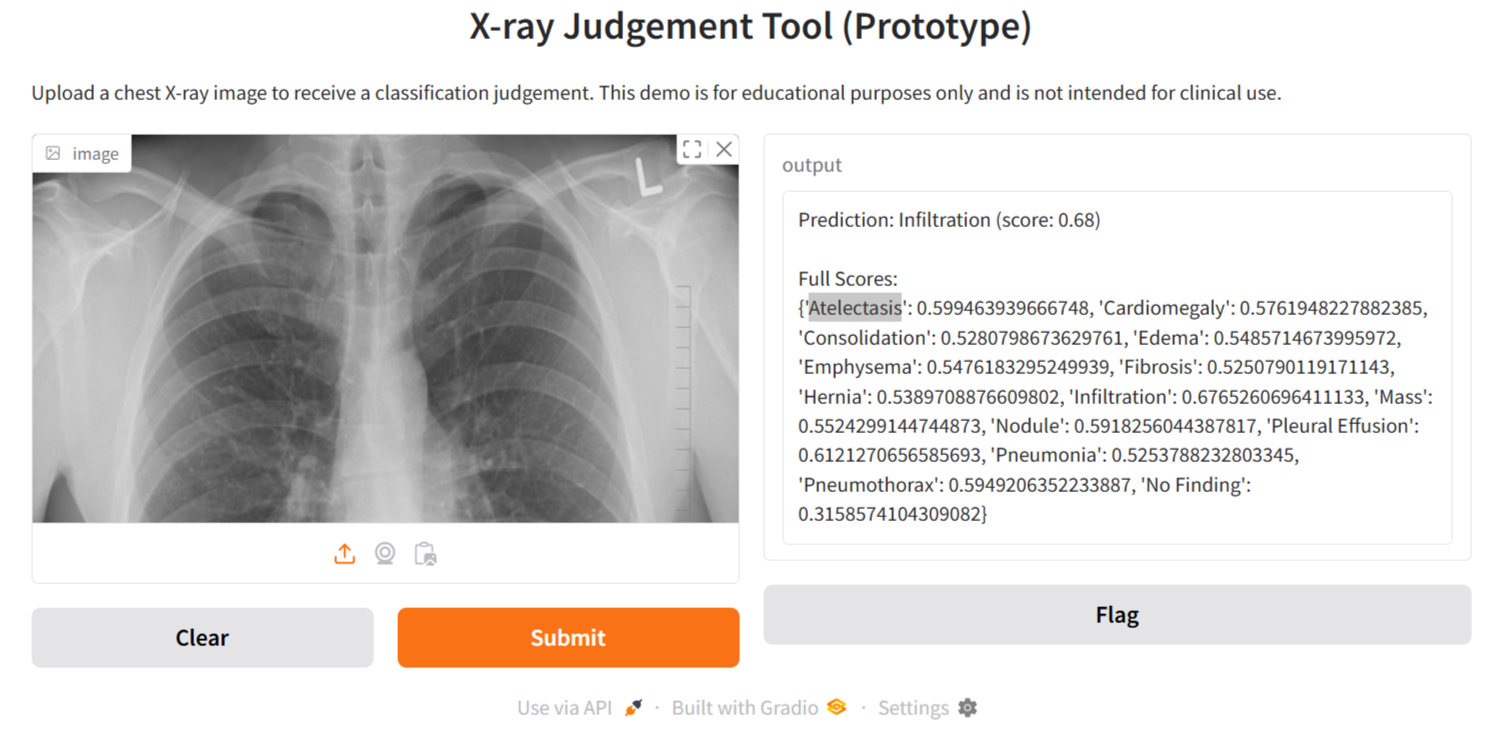
        return f"Prediction: {top_label} (score: {top_score:.2f})\nFull Scores:\n{results}"
    except Exception as e:
        return f"Error during inference: {str(e)}"

7. User Interface Creation

Using Gradio, create an interface that allows users to upload their X-ray images:

iface = gr.Interface(
    fn=classify_xray,
    inputs=gr.Image(type="pil"),
    outputs="text",
    title="X-ray Judgment Tool (Prototype)",
    description="Upload a chest X-ray image to receive a classification judgment. This demo is for educational purposes only and is not intended for clinical use."
)
iface.launch()

8. Conclusion

Through this tutorial, we have explored the development of an interactive tool for X-ray analysis. While this prototype is not ready for clinical deployment, it serves as an important foundation for future innovations in medical imaging applications. As you advance, remember to validate your model thoroughly and adhere to medical standards. This prototype offers a clear starting point for enhancing diagnostic practices with artificial intelligence.

For further guidance on integrating AI into your business operations, please feel free to contact us at hello@itinai.ru or connect with us on Telegram, X, and LinkedIn.


https://itinai.com/build-an-open-source-x-ray-judgment-tool-with-torchxrayvision-and-gradio/

#OpenSource #MedicalImaging #XrayAnalysis #AIinHealthcare #Gradio

Boosting Creative Writing Diversity with Diversified DPO and ORPO in AI Models


Boosting Creative Writing Diversity with Diversified DPO and ORPO in AI Models
https://itinai.com/boosting-creative-writing-diversity-with-diversified-dpo-and-orpo-in-ai-models/
Boosting Creative Writing Diversity with Diversified DPO and ORPO in AI Models

Enhancing Creative Writing with AI: Practical Solutions for Businesses

Understanding the Challenge of Creative Writing in AI

Creative writing relies heavily on diversity and imagination, presenting a unique challenge for artificial intelligence (AI) systems. Unlike factual writing, where there is often a single correct answer, creative writing allows for multiple valid responses. This variability can lead to a lack of diversity in outputs when AI models are not properly trained or adjusted post-training.

The Problem with Current Post-Training Methods

Most post-training methods focus on improving the quality of responses by aligning them with user preferences. However, this often results in outputs that are too similar, limiting the creative potential of the AI. Previous attempts to enhance diversity through techniques like sampling adjustments and iterative prompting have had mixed results, often sacrificing quality or introducing inconsistencies.

Innovative Solutions: Diversified DPO and ORPO

Researchers from Midjourney and New York University have introduced two innovative methods: Diversified DPO and Diversified ORPO. These techniques enhance traditional preference-based optimization by incorporating a deviation score, which measures how different a training example is from others responding to the same prompt. This approach prioritizes rare and diverse responses, leading to richer outputs.

Implementation and Results

These methods were applied to large models like Meta’s Llama-3.1-8B and Mistral-7B, using parameter-efficient fine-tuning. The results were promising:

  • The Llama-3.1-8B model with Diversified DPO achieved a reward score comparable to GPT-4o while significantly outperforming it in diversity.
  • In human evaluations, 68% of reviewers preferred the outputs from the new model for quality, and 100% found them more diverse.
  • Even with fewer training responses, the model maintained high performance by implementing a minimum deviation threshold.

Case Studies and Historical Context

Historically, AI-generated creative writing has struggled with the balance between quality and diversity. For instance, earlier models often produced repetitive outputs, limiting their usability in creative industries. The introduction of Diversified DPO and ORPO marks a significant advancement, showcasing how AI can evolve to meet the demands of creative tasks.

Practical Business Solutions

Businesses can leverage these advancements in AI to enhance their creative processes. Here are some practical steps:

  • Identify Automation Opportunities: Look for areas in your creative workflow where AI can add value, such as content generation or brainstorming.
  • Define Key Performance Indicators (KPIs): Establish metrics to measure the impact of AI on your creative output and ensure it aligns with your business goals.
  • Select Customizable Tools: Choose AI tools that can be tailored to your specific needs and objectives.
  • Start Small: Implement AI in a limited capacity, gather data on its effectiveness, and gradually expand its use based on results.

Conclusion

The introduction of Diversified DPO and ORPO represents a significant breakthrough in AI-driven creative writing. By emphasizing diversity without sacrificing quality, these methods enable businesses to harness the full potential of AI in storytelling and content creation. As AI continues to evolve, embracing these innovations can lead to richer, more varied outputs that enhance creative endeavors.


https://itinai.com/boosting-creative-writing-diversity-with-diversified-dpo-and-orpo-in-ai-models/

#CreativeWriting #AIDiversity #InnovativeSolutions #BusinessAI #ContentCreation

Evaluate Legal LLM Outputs for GDPR Compliance Using Atla’s Python SDK


Evaluate Legal LLM Outputs for GDPR Compliance Using Atla’s Python SDK
https://itinai.com/evaluate-legal-llm-outputs-for-gdpr-compliance-using-atlas-python-sdk/
Evaluate Legal LLM Outputs for GDPR Compliance Using Atla's Python SDK


Evaluating Legal Responses for GDPR Compliance Using Atla’s Evaluation Platform

Overview

This guide outlines a practical approach to assess the quality of legal responses generated by language models using Atla’s Evaluation Platform and Python SDK. Our focus is on ensuring that these responses comply with the General Data Protection Regulation (GDPR).

Implementation Steps

1. Setting Up the Environment

To begin, we need to install the necessary libraries and initialize the Atla client. This setup allows us to utilize Atla’s asynchronous evaluation capabilities effectively.

2. Preparing the Dataset

We create a dataset containing legal questions related to GDPR compliance, along with the corresponding responses generated by the language model. Each entry includes a label indicating whether it is compliant or not.

3. Defining Evaluation Criteria

We establish custom evaluation criteria based on key GDPR principles. This criteria guides the evaluation model in scoring responses appropriately, providing a score of 1 for compliant answers and 0 for non-compliant ones, along with justifications for each score.

4. Evaluating Responses

Using an asynchronous function, we evaluate each response against the defined criteria. This process allows us to efficiently gather scores and critiques for all entries in our dataset.

5. Reviewing Results

Finally, we iterate through the evaluated responses, presenting each question, its corresponding answer, and the evaluation critique along with the assigned score. This format provides a clear overview of how each response was assessed.

Case Study: Practical Application

Consider a company that implemented this evaluation framework. By using Atla’s platform, they were able to automate the assessment of legal responses, significantly reducing the time spent on compliance checks. Within three months, they reported a 30% increase in efficiency in their legal review processes, demonstrating the value of integrating AI into compliance workflows.

Conclusion

This implementation showcases how businesses can leverage Atla’s evaluation capabilities to ensure the quality and compliance of AI-generated legal responses. By defining specific evaluation criteria and automating the scoring process, organizations can achieve a more efficient and reliable assessment of their legal outputs.

For further assistance in integrating AI into your business processes, feel free to reach out to us at hello@itinai.ru or connect with us on Telegram. Follow us on Twitter and LinkedIn.


https://itinai.com/evaluate-legal-llm-outputs-for-gdpr-compliance-using-atlas-python-sdk/

#GDPRCompliance #LegalTech #AIIntegration #DataProtection #AtlaSDK

Sunday, March 30, 2025

VideoMind: Advancing Temporal-Grounded Video Understanding with Role-Based Agents


VideoMind: Advancing Temporal-Grounded Video Understanding with Role-Based Agents
https://itinai.com/videomind-advancing-temporal-grounded-video-understanding-with-role-based-agents/
VideoMind: Advancing Temporal-Grounded Video Understanding with Role-Based Agents


VideoMind: Enhancing Video Understanding with AI

VideoMind represents a significant advancement in the field of artificial intelligence, specifically in the realm of video understanding. This innovative system addresses the unique challenges posed by video content, which requires the ability to comprehend dynamic interactions over time. Below, we outline the key components of VideoMind and its practical implications for businesses.

Understanding the Challenges of Video Content

Videos differ from static images in that they contain temporal dimensions, making them more complex to analyze. Current AI models often struggle with video content because they lack the ability to pinpoint and revisit specific moments within a sequence. This limitation highlights the necessity for AI systems to adopt a more sophisticated approach to reasoning.

Key Innovations of VideoMind

Developed by researchers from the Hong Kong Polytechnic University and the National University of Singapore, VideoMind introduces two primary innovations:

  • Role-Based Workflow: VideoMind utilizes a role-based agentic workflow consisting of four specialized components:
    • Planner: Coordinates the roles and determines the next function based on queries.
    • Grounder: Localizes relevant moments by identifying timestamps based on text queries.
    • Verifier: Validates temporal intervals with binary responses.
    • Answerer: Generates responses based on identified video segments or the entire video.
  • Chain-of-LoRA Strategy: This strategy enables seamless role-switching through lightweight adaptors, improving efficiency without the need for multiple models.

Performance and Results

VideoMind has demonstrated state-of-the-art performance across 14 public benchmarks in various video understanding tasks. Notably, its 2B model outperforms many competitors, including larger models, in grounding metrics. For instance, on the NExT-GQA benchmark, it matches the performance of leading models while showcasing exceptional zero-shot capabilities.

Practical Applications for Businesses

Businesses can leverage the capabilities of VideoMind in several ways:

  • Automate Processes: Identify repetitive tasks in video analysis that can be automated, enhancing efficiency.
  • Enhance Customer Interactions: Utilize AI to analyze customer interactions through video, pinpointing moments where AI can add value.
  • Measure Impact: Establish key performance indicators (KPIs) to assess the effectiveness of AI implementations in business operations.
  • Start Small: Initiate AI projects on a smaller scale, gather data, and gradually expand usage based on proven effectiveness.

Conclusion

VideoMind represents a groundbreaking advancement in temporal-grounded video reasoning, combining innovative workflows and efficient strategies to tackle the complexities of video understanding. By adopting such technologies, businesses can enhance their operational efficiency, improve customer interactions, and make informed decisions based on data-driven insights. The future of multimodal video agents looks promising, paving the way for more sophisticated systems capable of understanding and processing video content effectively.

For further inquiries or guidance on implementing AI in your business, please contact us at hello@itinai.ru or connect with us on Telegram, X, and LinkedIn.


https://itinai.com/videomind-advancing-temporal-grounded-video-understanding-with-role-based-agents/

#VideoMind #AIUnderstanding #TemporalReasoning #VideoAnalysis #InnovativeTech

Hostinger Horizons: Create Custom Web Apps with No-Code AI Tool


Hostinger Horizons: Create Custom Web Apps with No-Code AI Tool
https://itinai.com/hostinger-horizons-create-custom-web-apps-with-no-code-ai-tool/
Hostinger Horizons: Create Custom Web Apps with No-Code AI Tool

Introducing Hostinger Horizons: Your No-Code AI Solution for Web Applications

In the rapidly changing world of web development, no-code platforms have made it easier for individuals and businesses to create applications. Hostinger Horizons is a standout AI-powered tool that allows users to create, edit, and publish custom web applications without needing any coding skills. This platform integrates essential services like hosting, domain registration, and email functionalities, providing a complete solution for anyone looking to establish an online presence.

Technical Overview

Hostinger Horizons employs advanced artificial intelligence and natural language processing to understand user requests and generate functional web applications. Users can interact with the platform through a simple chat interface, describing their desired application in everyday language. For instance, by stating a need for a “personal finance tracker that allows users to log expenses and view spending reports,” the AI can create an application that meets these requirements.

Key Technical Features

  • Real-Time Editing and Live Preview: Users can make changes and see instant updates, facilitating an efficient development process.
  • Multilingual Support: The platform supports over 80 languages, enabling users from various regions to develop applications in their native languages.
  • Image and Voice Input: Users can provide input through images or voice commands, increasing accessibility and flexibility in application creation.
  • Sandbox Environment: Hostinger Horizons allows users to test applications without affecting the live version, ensuring a smooth launch process.
  • Integrated Deployment: Once satisfied with the application, users can deploy it directly through the platform, which manages all backend processes like hosting and domain setup.

Business Considerations

Hostinger Horizons caters to a broad audience, including entrepreneurs, small businesses, and individual creators. By eliminating the need for coding skills, the platform empowers users to quickly turn ideas into functional applications.

Advantages for Businesses

  • Cost-Effective Development: Traditional web development can be expensive due to the need for skilled developers. Hostinger Horizons offers a more affordable alternative, particularly beneficial for startups and small businesses.
  • Rapid Prototyping: The platform allows for quick development and deployment, enabling businesses to test ideas and iterate based on feedback without significant time commitments.
  • Integrated Services: With built-in hosting, domain registration, and email services, businesses can manage their online presence from a single platform, simplifying operations.
  • Scalability: The cloud-based infrastructure ensures that applications can grow with the business, accommodating increased traffic and user engagement.

Pricing Structure

Hostinger Horizons offers various pricing plans to meet different needs:

  • Starter Plan: $19.99 per month includes 100 messages, hosting (one month free), unlimited bandwidth, up to 50 web apps, and free email services.
  • Hobbyist Plan: $49.99 per month offers 250 messages along with Starter Plan features.
  • Hustler Plan: $99.99 per month includes 500 messages with standard features.
  • Pro Plan: At $199.99 per month, this plan provides 1,000 messages and all included features.

Hostinger also offers a free trial with 5 messages for new users.

Tutorial: Creating a Web Application with Hostinger Horizons

Developing a web application with Hostinger Horizons is simple. Here’s a step-by-step guide:

  1. Sign Up: Choose a plan that fits your needs and log into your Hostinger account.
  2. Define Your Idea: Use the chat interface to describe your application. For example, “Create a web application for a Sudoku game with three difficulty levels.”
  3. Customize: Adjust layout, add features, and input content using the real-time editor.
  4. Test: Use the sandbox environment to ensure all features work correctly.
  5. Deploy: Once satisfied, click the deploy button to launch your application.

Conclusion

Hostinger Horizons revolutionizes the way businesses and individuals can create web applications. By leveraging no-code technology and AI, it lowers barriers and accelerates development, making it an invaluable tool for anyone looking to establish a digital presence. Whether you are a startup or an established business, Hostinger Horizons provides the tools you need to turn your ideas into reality.


https://itinai.com/hostinger-horizons-create-custom-web-apps-with-no-code-ai-tool/

#NoCode #AI #WebDevelopment #HostingerHorizons #CustomApps

Saturday, March 29, 2025

NVIDIA’s FFN Fusion: Revolutionizing Efficiency in Large Language Models


NVIDIA’s FFN Fusion: Revolutionizing Efficiency in Large Language Models
https://itinai.com/nvidias-ffn-fusion-revolutionizing-efficiency-in-large-language-models/
NVIDIA's FFN Fusion: Revolutionizing Efficiency in Large Language Models

NVIDIA AI Researchers Unveil FFN Fusion: A Breakthrough in Large Language Model Efficiency

Introduction to Large Language Models

Large language models (LLMs) are increasingly essential in various sectors, powering applications such as natural language generation, scientific research, and conversational agents. These models rely on transformer architecture, which processes input through alternating layers of attention mechanisms and feed-forward networks (FFNs). However, as these models grow in size and complexity, the computational demands for inference increase significantly, leading to efficiency challenges.

The Challenge of Sequential Computation

The sequential nature of transformers poses a significant bottleneck. Each layer’s output must be processed in a strict order, which becomes problematic as model sizes expand. This sequential computation leads to increased costs and reduced efficiency, particularly in applications requiring rapid multi-token generation, such as real-time AI assistants. Addressing this challenge is crucial for enhancing the scalability and accessibility of LLMs.

Current Techniques and Their Limitations

Several methods have been developed to improve efficiency:

  • Quantization: Reduces numerical precision to save memory and computation but risks accuracy loss.
  • Pruning: Eliminates redundant parameters to simplify models, though it can affect accuracy.
  • Mixture-of-Experts (MoE): Activates only a subset of parameters for specific tasks, but may underperform at intermediate batch sizes.

While these strategies have their merits, they often come with trade-offs that limit their effectiveness across diverse applications.

Introducing FFN Fusion

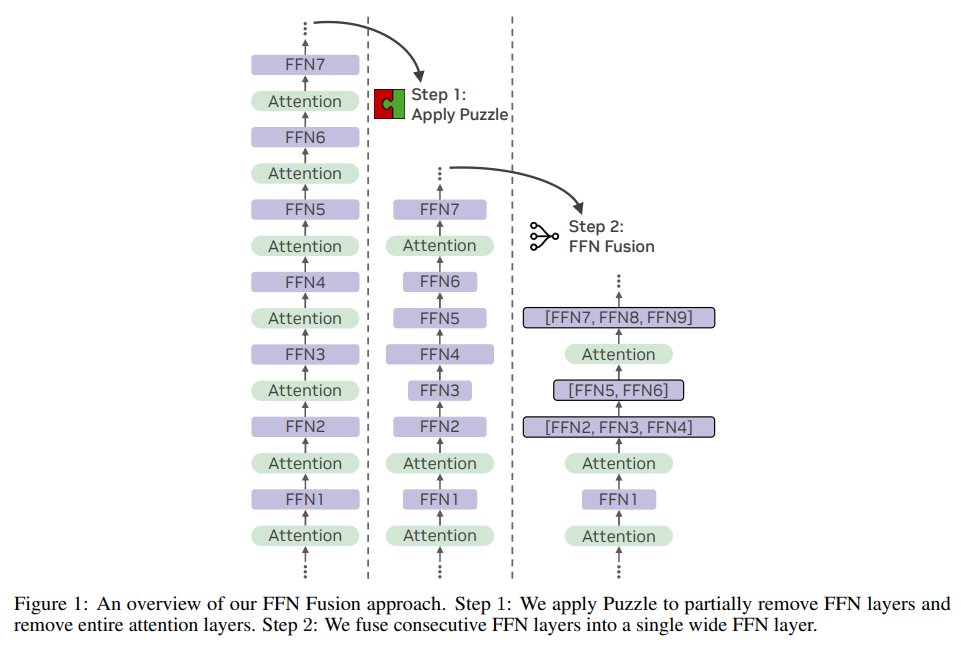
NVIDIA researchers have developed a novel optimization technique called FFN Fusion, which addresses the sequential bottleneck in transformers. This technique allows for the parallel execution of FFN sequences that exhibit minimal interdependency. By analyzing models like Llama-3.1-405B-Instruct, researchers created a new model, Ultra-253B-Base, which is both efficient and high-performing.

How FFN Fusion Works

FFN Fusion combines multiple consecutive FFN layers into a single, wider FFN. This process is based on mathematical principles that allow for parallel computation without sacrificing performance. For example, if three FFNs are traditionally stacked, their fusion enables simultaneous processing, significantly enhancing efficiency.

Results and Performance Metrics

The application of FFN Fusion to the Llama-405B model resulted in the Ultra-253B-Base, which achieved:

  • 1.71x improvement in inference latency
  • 35x reduction in per-token computational cost
  • Benchmark scores: 85.17% (MMLU), 72.25% (MMLU-Pro), 86.58% (HumanEval), 84.92% (Arena Hard), 9.19 (MT-Bench)
  • 50% reduction in memory usage due to kv-cache optimization

These results demonstrate that Ultra-253B-Base not only maintains competitive performance but also operates with significantly reduced resource requirements.

Key Takeaways

  • FFN Fusion effectively reduces sequential computation by parallelizing low-dependency FFN layers.
  • The technique is validated across various model sizes, proving its versatility.
  • Further research is needed to explore full transformer block parallelization due to stronger interdependencies.

Conclusion

The introduction of FFN Fusion marks a significant advancement in the efficiency of large language models. By rethinking architectural design, researchers have unlocked new levels of performance while reducing computational costs. This approach not only enhances the scalability of LLMs but also paves the way for more efficient AI applications across industries.


https://itinai.com/nvidias-ffn-fusion-revolutionizing-efficiency-in-large-language-models/

#NVIDIA #FFNFusion #LargeLanguageModels #AI efficiency #MachineLearning

UI-R1 Framework: Enhancing GUI Action Prediction with Rule-Based Reinforcement Learning


UI-R1 Framework: Enhancing GUI Action Prediction with Rule-Based Reinforcement Learning
https://itinai.com/ui-r1-framework-enhancing-gui-action-prediction-with-rule-based-reinforcement-learning/
UI-R1 Framework: Enhancing GUI Action Prediction with Rule-Based Reinforcement Learning


Introducing the UI-R1 Framework for GUI Action Prediction

Overview of the Challenge

Supervised fine-tuning (SFT) is the conventional method used to train large language models (LLMs) and graphical user interface (GUI) agents. However, SFT requires high-quality labeled datasets, leading to lengthy training times and significant computational costs. This reliance on extensive data creates obstacles in the development of AI technologies. Additionally, existing vision-language models (VLMs) trained through SFT often struggle with out-of-domain scenarios, which limits their effectiveness in real-world applications.

Proposed Solution: The UI-R1 Framework

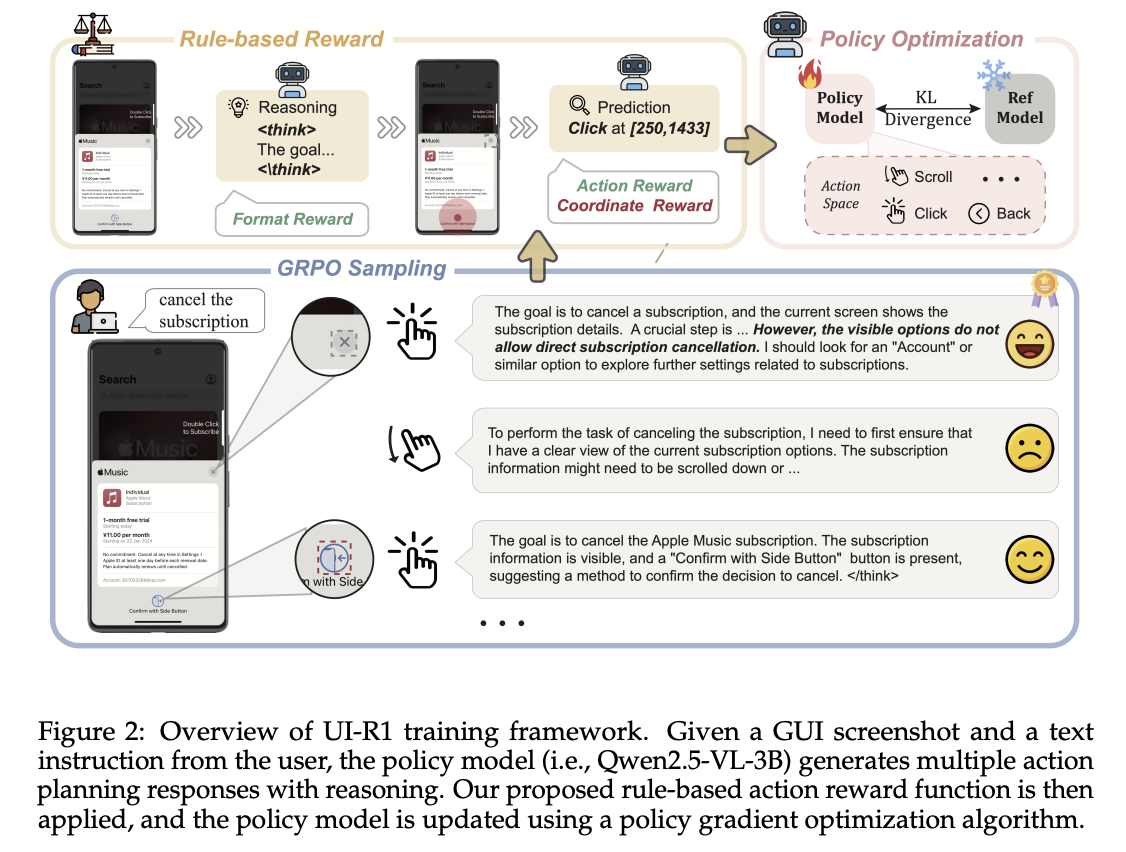
The UI-R1 framework, developed by researchers at vivo AI Lab and MMLab @ CUHK, enhances the reasoning capabilities of multimodal LLMs for GUI action prediction tasks. This framework utilizes rule-based reinforcement learning (RL), which requires only a small number of samples—ranging from dozens to thousands—rather than large datasets. This approach not only reduces training time but also improves model performance in both in-domain and out-of-domain tasks.

Key Features of UI-R1

  • Unified Rule-Based Action Reward: The framework introduces a novel reward function that evaluates both action types and arguments, simplifying task complexity and improving learning efficiency.
  • Policy-Based Algorithms: The Group Relative Policy Optimization (GRPO) method optimizes model performance, resulting in significant accuracy improvements.
  • Small High-Quality Dataset: The research utilizes a curated dataset of 136 challenging tasks across five common mobile device action types, demonstrating the framework’s effectiveness even with limited data.

Performance Insights

UI-R1 has demonstrated impressive results in various benchmarks. The framework improved the GUI grounding capability of the 3B model by 20% on ScreenSpot and 6% on ScreenSpot-Pro, outperforming many 7B models. Notably, UI-R1 achieved a 15% increase in action type prediction accuracy and a 20% enhancement in click element grounding accuracy compared to the Qwen2.5-VL model, using only 136 training samples.

Evaluation Metrics

The model’s performance was assessed using specialized benchmarks, including:

  • ScreenSpot: Evaluates GUI grounding across various platforms.
  • ScreenSpot-Pro: Focuses on high-resolution professional environments with expert-annotated tasks.

Strategic Recommendations for Businesses

To effectively integrate AI technologies like UI-R1 into your business processes, consider the following strategies:

  • Identify Automation Opportunities: Look for processes that can be automated to enhance efficiency and customer interactions.
  • Establish Key Performance Indicators (KPIs): Monitor the impact of your AI investments on business outcomes.
  • Select Customizable Tools: Choose AI tools that can be tailored to meet your specific business objectives.
  • Start Small: Initiate with a pilot project, assess its effectiveness, and gradually expand your AI applications.

Conclusion

The UI-R1 framework presents a significant advancement in the realm of GUI action prediction by extending rule-based reinforcement learning. Its ability to achieve high performance with limited training data positions it as a scalable and efficient alternative to traditional supervised fine-tuning methods. As AI continues to evolve, frameworks like UI-R1 will play a crucial role in enhancing the capabilities of multimodal GUI agents, paving the way for innovative applications across various industries.

For more insights and guidance on managing AI in your business, please contact us at hello@itinai.ru. Join our community on Telegram, X, and LinkedIn.


https://itinai.com/ui-r1-framework-enhancing-gui-action-prediction-with-rule-based-reinforcement-learning/

#UIR1Framework #GUIActionPrediction #ReinforcementLearning #AIAutomation #TechInnovation

Efficient Inference-Time Scaling for Flow Models: Enhancing Sampling and Compute Allocation


Efficient Inference-Time Scaling for Flow Models: Enhancing Sampling and Compute Allocation
https://itinai.com/efficient-inference-time-scaling-for-flow-models-enhancing-sampling-and-compute-allocation/
Efficient Inference-Time Scaling for Flow Models: Enhancing Sampling and Compute Allocation


Optimizing Inference-Time for Flow Models: Practical Business Solutions

Introduction

Recent developments in artificial intelligence have shifted focus from simply increasing model size and training data to enhancing the efficiency of inference-time computation. This optimization strategy can significantly improve model performance without necessitating a complete model retraining. For businesses, implementing these advancements can lead to better resource allocation, heightened efficiency, and improved user satisfaction.

Understanding Inference-Time Scaling

What is Inference-Time Scaling?

Inference-time scaling refers to the techniques employed to optimize the computational resources used during the model inference stage. By leveraging additional computational power, businesses can enhance the performance of models, such as those used in language processing and image generation.

Case Studies and Applications

Models like OpenAI’s GPT and DeepSeek have shown substantial improvements in their outputs by employing this scaling technique. For example, in text-to-image generation, the traditional sampling methods often miss intricate relationships between objects, leading to subpar results. By adopting inference-time scaling, businesses can generate outputs that closely align with user preferences and specifications.

Categories of Inference-Time Scaling Techniques

1. Fine-Tuning Approaches

Fine-tuning methods improve model alignment with specific tasks but necessitate retraining, which can hinder scalability. While effective, they may not always be the optimal choice for organizations looking to implement scalable AI solutions.

2. Particle-Sampling Techniques

Particle-sampling methods, such as those used in techniques like SVDD and CoDe, offer a more dynamic approach by selecting high-reward samples iteratively. This significantly boosts output quality and is particularly useful for tasks like text-to-image generation.

Innovations in Flow Model Sampling

Overcoming Limitations of Deterministic Processes

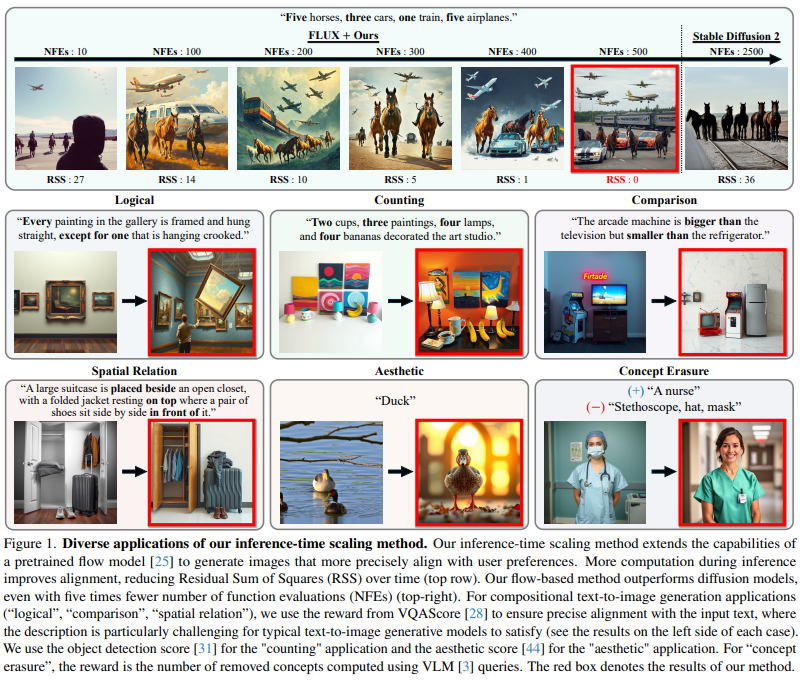
Researchers from KAIST have developed a novel inference-time scaling method specifically designed for flow models, addressing the inherent limitations associated with their deterministic nature.

Key Innovations Introduced

  • SDE-Based Generation: This method enables stochastic sampling, allowing for greater variability in the results.
  • VP Interpolant Conversion: This technique enhances the diversity of generated samples, improving alignment with desired outcomes.
  • Rollover Budget Forcing (RBF): A dynamic strategy for adaptive computational resource allocation that ensures efficiency during the inference process.

Experimental Findings

Studies have shown that these methods not only improve the alignment of generated outputs with user expectations but also enhance the overall efficiency of the AI systems deployed. The results indicate that organizations that implement these innovations can produce high-quality images and videos without sacrificing performance, as evidenced by metrics like VQAScore and RSS.

Steps Forward for Businesses

How to Implement AI Solutions

For organizations looking to integrate AI effectively, consider the following steps:

  1. Identify Automation Opportunities: Look for processes that can be streamlined or automated to maximize efficiency.
  2. Define Key Performance Indicators (KPIs): Establish important metrics that will help you measure the impact of AI initiatives.
  3. Select Appropriate Tools: Choose AI solutions that meet your business needs while allowing for customization.
  4. Start Small: Initiate a pilot project, gather and analyze data, and scale up gradually based on the findings.

Conclusion

The advancements in inference-time scaling for flow models provide businesses with a strategic advantage. By incorporating techniques like stochastic sampling and adaptive resource allocation, organizations can achieve better performance while ensuring high-quality outputs. As AI continues to evolve, leveraging these innovations will be pivotal in driving success and maintaining a competitive edge.

For further assistance in managing AI solutions in your business, reach out to us at hello@itinai.ru or connect with us on Telegram, X, and LinkedIn.


https://itinai.com/efficient-inference-time-scaling-for-flow-models-enhancing-sampling-and-compute-allocation/

#InferenceTimeScaling #FlowModels #AIOptimization #ComputationalEfficiency #BusinessSolutions

Friday, March 28, 2025

Empowering Time Series AI with Synthetic Data: Salesforce’s Innovative Approach


Empowering Time Series AI with Synthetic Data: Salesforce’s Innovative Approach
https://itinai.com/empowering-time-series-ai-with-synthetic-data-salesforces-innovative-approach/
Empowering Time Series AI with Synthetic Data: Salesforce's Innovative Approach


Empowering Time Series AI: How Salesforce is Leveraging Synthetic Data

Introduction

Time series analysis is crucial for various business applications, yet it faces significant challenges related to data availability, quality, and diversity. Real-world datasets often encounter limitations due to regulatory restrictions, biases, and insufficient annotations. These obstacles hinder the development of effective Time Series Foundation Models (TSFMs) and Time Series Language Models (TSLLMs), impacting essential tasks such as forecasting, classification, and anomaly detection.

Salesforce’s Innovative Approach

Salesforce AI Research has proposed a strategic solution to these challenges through the use of synthetic data. Their recent study outlines a method for enhancing TSFMs and TSLLMs by focusing on bias reduction, increasing dataset diversity, and enriching contextual information. This approach is particularly valuable in sensitive sectors like healthcare and finance, where data sharing is tightly regulated.

Key Methodologies

The methodology employed by Salesforce AI Research incorporates various synthetic data generation techniques tailored to capture specific time series dynamics, including trends, seasonal patterns, and noise characteristics. Some notable methods include:

  • ForecastPFN: Combines linear-exponential trends with periodic seasonalities, simulating realistic scenarios.
  • TimesFM: Integrates piecewise linear trends with autoregressive moving average (ARMA) models.
  • KernelSynth by Chronos: Utilizes Gaussian Processes combined with various kernels to create rich synthetic datasets.

Case Studies and Findings

The research findings indicate substantial advantages of using synthetic data throughout the model development lifecycle:

  • In pretraining, models like ForecastPFN showed significant enhancements in performance when trained on synthetic datasets.
  • Chronos discovered optimal performance by mixing 10% synthetic data with real-world data, beyond which performance could decline.
  • Synthetic data also facilitated precise evaluation of model capabilities, enabling researchers to uncover internal representations and identify gaps in learned patterns.

Addressing Limitations and Future Directions

Despite the promising results, the paper identifies limitations in the current use of synthetic data. Key areas for improvement include:

  • The need for structured frameworks to systematically integrate synthetic datasets into existing models.
  • Exploration of data-driven generative techniques to enhance the realism of synthetic datasets.
  • Leveraging synthetic data during fine-tuning phases to address domain-specific gaps more effectively.

Conclusion

Salesforce AI Research highlights that synthetic data is a powerful tool for overcoming data-related challenges in time series analysis. By integrating high-quality synthetic datasets throughout the model development process, TSFMs and TSLLMs can achieve improved generalization, reduced biases, and enhanced performance across various analytical tasks. Future research should focus on enhancing data realism, systematically addressing data gaps, and utilizing iterative synthetic data generation processes. These advancements have the potential to significantly broaden the applicability and reliability of time series models, paving the way for future innovations in artificial intelligence.

Next Steps for Businesses

To leverage AI effectively in your organization, consider the following steps:

  • Identify processes that can be automated using AI to enhance efficiency.
  • Determine key performance indicators (KPIs) to measure the impact of your AI initiatives.
  • Select customizable tools that align with your business objectives.
  • Start with small projects to test effectiveness before scaling up.

If you require assistance in managing AI within your business, please reach out to us at hello@itinai.ru or connect with us on Telegram, X, or LinkedIn.


https://itinai.com/empowering-time-series-ai-with-synthetic-data-salesforces-innovative-approach/

#SyntheticData #TimeSeriesAI #SalesforceInnovation #DataScience #AIResearch

Step-by-Step Guide to Solve 1D Burgers’ Equation with PINNs in PyTorch


Step-by-Step Guide to Solve 1D Burgers’ Equation with PINNs in PyTorch
https://itinai.com/step-by-step-guide-to-solve-1d-burgers-equation-with-pinns-in-pytorch/
Step-by-Step Guide to Solve 1D Burgers' Equation with PINNs in PyTorch

A Practical Guide to Solving 1D Burgers’ Equation Using Physics-Informed Neural Networks (PINNs) with PyTorch

Introduction to Physics-Informed Neural Networks (PINNs)

This guide presents a straightforward approach to leveraging Physics-Informed Neural Networks (PINNs) for solving the one-dimensional Burgers’ equation. By utilizing PyTorch in a Google Colab environment, we aim to seamlessly integrate physical laws into the solving process. This method significantly reduces dependency on extensive labeled datasets and offers a modern solution for complex, non-linear partial differential equations.

Prerequisites

To get started, ensure you have the following libraries installed:

  • PyTorch for deep learning
  • NumPy for numerical operations
  • Matplotlib for data visualization

Setting Up the Simulation Domain

We begin by defining the simulation parameters, which include spatial and temporal boundaries, viscosity, and the number of points for collocation, initial, and boundary conditions. The generated data points are converted into PyTorch tensors for further computation.

Creating the PINN Model

We define a custom PINN by extending the PyTorch nn.Module. The architecture of the network includes multiple layers, utilizing activation functions that embody the physics of the problem. This structured approach helps the model learn efficiently while respecting the underlying physics.

Computing the PDE Residual

The next step involves calculating the residual of the Burgers’ equation using automatic differentiation. A comprehensive loss function is formulated, which incorporates the PDE residual, initial conditions, and boundary conditions, guiding the network towards a solution that adheres to the defined constraints.

Training the Model

The model is trained using the Adam optimizer over a specified number of epochs. Throughout the training process, loss values are computed and logged periodically to monitor progress. After training completes, the model should effectively capture the dynamics defined by Burgers’ equation.

Visualizing the Results

After the training process, we generate a grid over the defined spatial and temporal domains and use the trained model to predict the solution. The results are visualized through contour plots, providing insight into how well the model approximates the equation dynamics.

Case Studies and Historical Context

PINNs represent a significant advancement in computational modeling. They have been applied in various engineering fields and scientific studies, showing promise in areas such as fluid dynamics, heat transfer, and even climate modeling. For instance, researchers have successfully used PINNs to model complex physical systems, demonstrating their robustness compared to traditional numerical methods.

Conclusion

This tutorial covers the effective implementation of PINNs to solve the 1D Burgers’ equation by merging physics with modern computational techniques. By thoughtfully constructing the neural network and incorporating physical laws into the training process, we create a powerful tool for tackling challenging problems in computational science and engineering. This methodology opens avenues for exploring higher-dimensional systems and sophisticated neural architectures, enhancing our capabilities in modeling complex phenomena.

Next Steps

To further enhance your understanding and application of AI, consider the following:

  • Identify processes within your organization that can benefit from automation through AI.
  • Establish key performance indicators (KPIs) to measure the effectiveness of AI implementations.
  • Begin with small-scale projects, analyzing data to refine your approach before expanding.

If you need assistance in managing AI in your business, feel free to contact us at hello@itinai.ru. You can also reach us through our social media channels for further engagement.


https://itinai.com/step-by-step-guide-to-solve-1d-burgers-equation-with-pinns-in-pytorch/

#PINNs #BurgersEquation #DeepLearning #PyTorch #ComputationalPhysics

UCLA Unveils OpenVLThinker-7B: Advanced Reinforcement Learning Model for Visual Reasoning


UCLA Unveils OpenVLThinker-7B: Advanced Reinforcement Learning Model for Visual Reasoning
https://itinai.com/ucla-unveils-openvlthinker-7b-advanced-reinforcement-learning-model-for-visual-reasoning/
UCLA Unveils OpenVLThinker-7B: Advanced Reinforcement Learning Model for Visual Reasoning


Enhancing Visual Reasoning with OpenVLThinker-7B

The University of California, Los Angeles (UCLA) has developed a groundbreaking model known as OpenVLThinker-7B. This model utilizes reinforcement learning to improve complex visual reasoning and step-by-step problem solving in multimodal systems. Here, we will discuss its significance, methodology, and practical applications in business.

Understanding the Challenge

Large vision-language models (LVLMs) have made significant strides in combining language processing with image interpretation. However, they often struggle with tasks requiring multi-step reasoning, such as understanding charts or solving visual math problems. This limitation stems from their inability to perform complex reasoning involving logical deduction based on visual data.

Innovative Methodology

The researchers at UCLA addressed these challenges by introducing a novel training methodology that combines supervised fine-tuning (SFT) and reinforcement learning (RL). This approach consists of several key steps:

  • Initial Caption Generation: The model begins by generating image captions using a base model, Qwen2.5-VL-3B.
  • Structured Reasoning Chains: These captions are then processed to create structured reasoning outputs, which serve as training data.
  • Iterative Training: The model undergoes multiple training cycles, alternating between SFT and RL to enhance its reasoning capabilities.

Performance Improvements

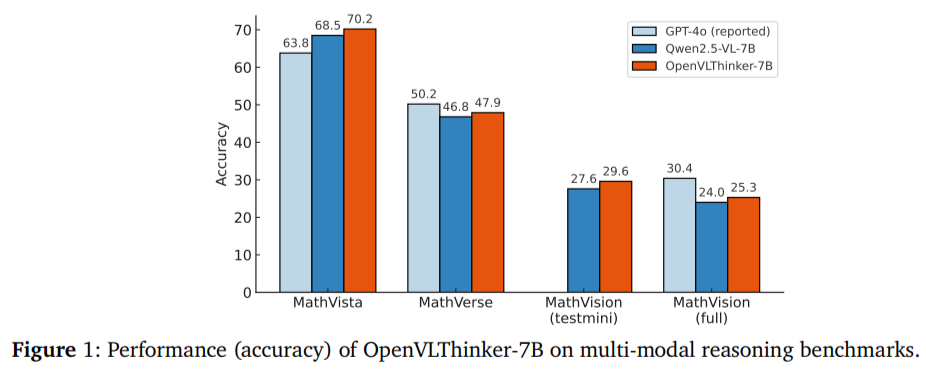
Quantitative results demonstrate the effectiveness of OpenVLThinker-7B. For instance, on the MathVista benchmark, the model achieved an accuracy of 70.2%, a significant improvement from the base model’s 50.2%. Similar enhancements were observed across other datasets, such as MathVerse and MathVision, highlighting the model’s ability to learn and generalize better to complex tasks.

Practical Applications in Business

OpenVLThinker-7B presents several opportunities for businesses, particularly in the areas of education, visual analytics, and assistive technology. Here are some practical solutions:

  • Automated Educational Tools: Develop AI-driven platforms that enhance learning through visual problem-solving capabilities.
  • Visual Data Analytics: Utilize the model for interpreting complex data visualizations, providing clearer insights for decision-making.
  • Assistive Technologies: Create tools that aid individuals with disabilities by interpreting visual cues and generating helpful responses.

Conclusion

In summary, OpenVLThinker-7B represents a significant advancement in the field of artificial intelligence, particularly in enhancing visual reasoning capabilities. By leveraging a novel training approach that combines supervised fine-tuning with reinforcement learning, this model not only improves accuracy but also addresses the critical need for multi-step reasoning in multimodal tasks. Businesses can harness this technology to automate processes, enhance customer interactions, and ultimately drive growth.


https://itinai.com/ucla-unveils-openvlthinker-7b-advanced-reinforcement-learning-model-for-visual-reasoning/

#OpenVLThinker7B #VisualReasoning #ReinforcementLearning #AIInnovation #UCLAResearch

Create a Data Science Agent with Gemini 2.0 and Google API: A Step-by-Step Tutorial


Create a Data Science Agent with Gemini 2.0 and Google API: A Step-by-Step Tutorial
https://itinai.com/create-a-data-science-agent-with-gemini-2-0-and-google-api-a-step-by-step-tutorial/
Create a Data Science Agent with Gemini 2.0 and Google API: A Step-by-Step Tutorial


Creating a Data Science Agent: A Practical Guide

Introduction

This guide outlines how to create a data science agent using Python’s Pandas library, Google Cloud’s generative AI capabilities, and the Gemini Pro model. By following this tutorial, businesses can leverage advanced AI tools to enhance data analysis and derive meaningful insights from their datasets.

Setting Up the Environment

To begin, you need to install the necessary libraries for data manipulation and AI analysis. This involves using the following command:

  • Install Libraries: Use the command !pip install pandas google-generativeai --quiet to install Pandas and the Google Generative AI library.

Importing Required Libraries

Next, import the libraries essential for data manipulation and AI functionality:

  • Pandas: For handling data in DataFrame format.
  • Generative AI: To access Google’s AI capabilities.
  • Markdown: For rendering outputs in a markdown format.

Configuring Google Cloud API

Set up your Google Cloud API key to authenticate your requests:

  • API Key: Replace «Use Your API Key Here» with your actual API key.
  • Model Initialization: Use the command model = genai.GenerativeModel('gemini-2.0-flash-lite') to initialize the AI model.

Creating a Sample Sales Dataset

Construct a sample sales dataset using a Pandas DataFrame, which includes various products and their sales data:

  • Data Structure: The DataFrame includes columns for Product, Category, Region, Units Sold, and Price.
  • Example Data: Products include Laptop, Mouse, Keyboard, Monitor, Webcam, and Headphones.

Interacting with the AI Model

Develop a function to query the Gemini Pro model about the DataFrame:

  • Function Definition: The function ask_gemini_about_data(dataframe, query) takes a DataFrame and a natural language question as inputs.
  • Response Generation: The function constructs a prompt and retrieves an analytical response from the AI model.

Example Queries

Here are some example queries that can be made to the data science agent:

  • Total Units Sold: “What is the total number of units sold across all products?”
  • Highest Selling Product: “Which product had the highest number of units sold?”
  • Average Product Price: “What is the average price of the products?”
  • Products in a Region: “Show me the products sold in the ‘North’ region.”
  • Total Revenue Calculation: “Calculate the total revenue for each product and present it in a table.”

Conclusion

This tutorial demonstrates how to effectively combine traditional data analysis tools with modern AI technologies to create a powerful data science agent. By utilizing Pandas and Google’s generative AI capabilities, businesses can streamline their data analysis processes, enhance productivity, and uncover valuable insights from their datasets.

Call to Action

Explore how artificial intelligence can transform your business operations. Identify processes that can be automated, track key performance indicators (KPIs) to measure AI impact, and start with small projects to gradually expand AI usage. For guidance on managing AI in your business, contact us at hello@itinai.ru or connect with us on Telegram and LinkedIn.


https://itinai.com/create-a-data-science-agent-with-gemini-2-0-and-google-api-a-step-by-step-tutorial/

#DataScienceAgent #Gemini20 #GoogleAPI #AIIntegration #DataAnalysis

Sonata: A Breakthrough in Self-Supervised 3D Point Cloud Learning


Sonata: A Breakthrough in Self-Supervised 3D Point Cloud Learning
https://itinai.com/sonata-a-breakthrough-in-self-supervised-3d-point-cloud-learning/
Sonata: A Breakthrough in Self-Supervised 3D Point Cloud Learning

Advancements in 3D Point Cloud Learning: The Sonata Framework

Meta Reality Labs Research, in collaboration with the University of Hong Kong, has introduced Sonata, a groundbreaking approach to self-supervised learning (SSL) for 3D point clouds. This innovative framework aims to overcome significant challenges in creating meaningful point representations with minimal supervision, addressing the limitations of existing SSL methods.

Challenges in 3D Self-Supervised Learning

3D SSL has struggled with the “shortcut” problem, where models depend too heavily on low-level geometric features, such as surface normals or point heights. This over-reliance can lead to poor generalization and a lack of semantic depth in the representations, making it difficult to apply these models effectively in real-world scenarios.

Introducing Sonata: A New Approach

Sonata is designed to tackle these challenges by employing a self-supervised learning framework that obscures low-level spatial cues while enhancing the focus on richer input features. Key strategies include:

  • Coarser Scale Operations: By working at coarser scales, Sonata minimizes the influence of spatial information that could dominate the learned representations.
  • Point Self-Distillation: This method gradually increases the complexity of tasks through adaptive masking, promoting a deeper semantic understanding of the data.
  • Elimination of Decoders: Sonata avoids using decoder structures, which are typically found in hierarchical models, preventing the reintroduction of local geometric shortcuts.
  • Point Jitter: Introducing random perturbations to spatial coordinates of masked points further discourages reliance on trivial geometric features.

Empirical Results and Performance

Sonata has demonstrated impressive performance improvements in benchmarks such as ScanNet, achieving a linear probing accuracy of 72.5%, significantly exceeding previous state-of-the-art SSL methods. Notably, it maintains robust performance even with limited data, effectively utilizing as little as 1% of the ScanNet dataset. Its parameter efficiency allows it to deliver strong results with fewer resources compared to traditional approaches.

Real-World Applications and Case Studies

Sonata’s versatility is showcased through its application across various semantic segmentation tasks, including indoor datasets like ScanNet and ScanNet200, as well as outdoor datasets such as Waymo. The framework consistently achieves state-of-the-art outcomes, demonstrating its potential for practical applications in diverse environments.

Conclusion

In summary, Sonata represents a significant leap forward in 3D self-supervised learning. By effectively addressing the geometric shortcut problem and integrating innovative methods like self-distillation, Sonata provides richer and more reliable representations. Its ability to scale with large datasets and its performance in low-resource scenarios make it a valuable tool for future research and practical applications in 3D representation learning.


https://itinai.com/sonata-a-breakthrough-in-self-supervised-3d-point-cloud-learning/

#3DPointCloud #SelfSupervisedLearning #SonataFramework #AIResearch #DataScience

Thursday, March 27, 2025

Google AI Launches TxGemma: Advanced LLMs for Drug Development and Therapeutic Tasks


Google AI Launches TxGemma: Advanced LLMs for Drug Development and Therapeutic Tasks
https://itinai.com/google-ai-launches-txgemma-advanced-llms-for-drug-development-and-therapeutic-tasks/
Google AI Launches TxGemma: Advanced LLMs for Drug Development and Therapeutic Tasks


Google AI’s TxGemma: A Revolutionary Approach to Drug Development

Introduction to TxGemma

Drug development is a complex and expensive process, with many potential failures along the way. Traditional methods often require extensive testing from initial target identification to later-stage clinical trials, consuming a lot of time and resources. To streamline this process, predictive modeling and computational methods are becoming essential tools. However, many of the existing models are too specialized, limiting their usefulness across various therapeutic tasks.

The TxGemma Solution

Google AI has launched TxGemma, a series of large language models (LLMs) designed to assist in different therapeutic tasks within drug development. TxGemma stands out due to its integration of diverse datasets, spanning small molecules, proteins, nucleic acids, diseases, and cell lines. This allows it to support multiple stages of the therapeutic development pipeline.

Available Models

TxGemma comes in three sizes: 2 billion (2B), 9 billion (9B), and 27 billion (27B) parameters, all fine-tuned from the Gemma-2 architecture. Additionally, TxGemma-Chat offers an interactive model aimed at facilitating discussions and detailed analyses among scientists, promoting transparency in the use of these models.

Technical Capabilities

TxGemma leverages the Therapeutic Data Commons (TDC), which includes over 15 million data points from 66 therapeutically relevant datasets. The predictive variant, TxGemma-Predict, shows strong performance across these datasets, often surpassing both generalist and specialist models currently used in therapeutic modeling. It achieves this with fewer training samples, which is especially beneficial in data-scarce environments.

Advanced Features

TxGemma’s advanced features include Agentic-Tx, which dynamically integrates predictive insights and interactive discussions with external tools. This integration significantly enhances the ability to navigate complex therapeutic queries.

Case Studies and Performance Metrics

Empirical evaluations demonstrate TxGemma’s effectiveness. It outperformed existing state-of-the-art models in 45 tasks and specialized models in 26 tasks, particularly excelling in predicting adverse events during clinical trials. On challenging benchmarks, such as ChemBench, Agentic-Tx improved accuracy by 5.6%, while it achieved a 17.9% improvement on Humanity’s Last Exam.

Real-World Applications

The practical utility of TxGemma is evident in clinical trial safety evaluations. For instance, TxGemma-27B-Predict showed strong predictive performance with fewer training samples, indicating enhanced reliability in real-time applications, such as virtual screening.

Conclusion

In summary, Google AI’s TxGemma marks a significant advancement in computational therapeutic research by merging predictive accuracy with interactive reasoning and data efficiency. By releasing TxGemma for public use, Google empowers researchers to validate and adapt these models to their data, enhancing reproducibility in therapeutic research. With its advanced conversational capabilities through TxGemma-Chat and workflow integration via Agentic-Tx, this suite equips researchers with powerful tools to improve decision-making in drug development.

For further information on how artificial intelligence can enhance your business processes, explore opportunities for automation, and identify suitable metrics to evaluate your AI investments. Start small, gather data on effectiveness, and gradually expand your AI efforts. For guidance on managing AI in business, contact us at hello@itinai.ru.


https://itinai.com/google-ai-launches-txgemma-advanced-llms-for-drug-development-and-therapeutic-tasks/

#GoogleAI #TxGemma #DrugDevelopment #ArtificialIntelligence #LLMs

Open Deep Search: Democratizing AI Search with Open-Source Reasoning Agents


Open Deep Search: Democratizing AI Search with Open-Source Reasoning Agents
https://itinai.com/open-deep-search-democratizing-ai-search-with-open-source-reasoning-agents/
Open Deep Search: Democratizing AI Search with Open-Source Reasoning Agents

Introducing Open Deep Search (ODS): A Revolutionary Open-Source Framework for Enhanced Search

The landscape of search engine technology has evolved rapidly, primarily favoring proprietary solutions like Google and GPT-4. While these systems demonstrate strong performance, their closed-source nature raises concerns regarding transparency, innovation, and community collaboration. This exclusivity limits the potential for customization and restricts broader engagement from academic and entrepreneurial sectors in search-enhanced artificial intelligence (AI).

Understanding Open Deep Search (ODS)

In response to these challenges, a collaborative effort from researchers at the University of Washington, Princeton University, and UC Berkeley has led to the development of Open Deep Search (ODS). This open-source framework enables seamless integration with any chosen large language model (LLM) in a modular fashion. ODS consists of two key components:

  • Open Search Tool: This tool features an advanced retrieval pipeline that includes intelligent query rephrasing to better capture user intent, resulting in more accurate and diverse search results. It also employs refined chunking and re-ranking techniques to filter results based on relevance.
  • Open Reasoning Agent: This agent utilizes two methodologies: the Chain-of-thought ReAct agent and the Chain-of-code CodeAct agent. These agents interpret user queries, manage tool usage, and generate comprehensive, contextually accurate responses.

Performance Metrics and Case Studies

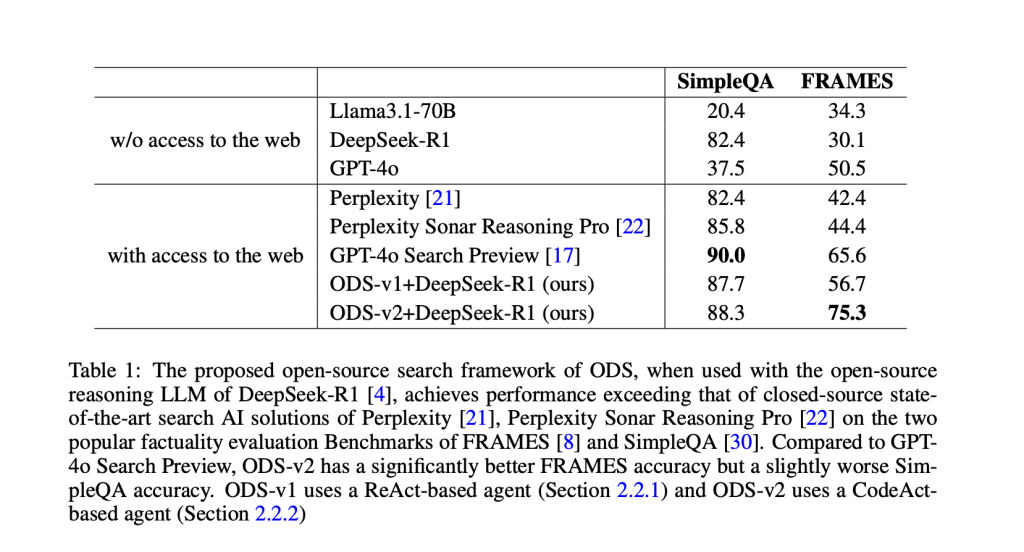
Empirical evaluations highlight the effectiveness of ODS. When integrated with DeepSeek-R1, an open-source reasoning model, ODS-v2 achieved impressive accuracy rates of 88.3% on the SimpleQA benchmark and 75.3% on the FRAMES benchmark. This performance surpasses proprietary alternatives like Perplexity and Sonar Reasoning Pro, which scored 85.8% and 44.4% respectively. Notably, ODS-v2 outperformed OpenAI’s GPT-4 on the FRAMES benchmark by 9.7% in accuracy.

Adaptive Resource Management

A standout feature of ODS is its adaptive use of tools, showcasing strategic decision-making in resource management. For straightforward queries, ODS minimizes additional searches, demonstrating efficient resource utilization. Conversely, for complex multi-hop queries, it intelligently increases web searches, reflecting a tailored approach to query complexity.

Practical Business Solutions

Organizations can leverage ODS to enhance their search capabilities through the following practical solutions:

  • Automation of Processes: Identify areas where AI can automate repetitive tasks, improving efficiency and productivity.
  • Enhancing Customer Interactions: Utilize AI to enrich customer engagement, ensuring timely and relevant responses.
  • Tracking Key Performance Indicators (KPIs): Establish metrics to assess the impact of AI investments on business outcomes.
  • Custom Tool Selection: Choose tools that align with your specific needs and allow for customization to meet your objectives.
  • Gradual Implementation: Start with small AI projects, gather data on their effectiveness, and expand usage based on insights.

Conclusion

Open Deep Search represents a significant advancement in democratizing search-enhanced AI by providing an open-source framework compatible with various LLMs. It fosters innovation and transparency within the AI research community while encouraging broader participation in the development of advanced search and reasoning capabilities. By integrating sophisticated retrieval techniques with adaptive reasoning methodologies, ODS sets a robust standard for the future of search-integrated large language models.

For further inquiries or guidance on managing AI in your business, please contact us at hello@itinai.ru. You can also connect with us on Telegram, X, and LinkedIn.


https://itinai.com/open-deep-search-democratizing-ai-search-with-open-source-reasoning-agents/

#OpenDeepSearch #AIDemocratization #OpenSourceAI #SearchTechnology #InnovationInAI

Monocular Depth Estimation with Intel MiDaS on Google Colab Using PyTorch and OpenCV

TokenBridge: Optimizing Token Representations for Enhanced Visual Generation


TokenBridge: Optimizing Token Representations for Enhanced Visual Generation
https://itinai.com/tokenbridge-optimizing-token-representations-for-enhanced-visual-generation/
TokenBridge: Optimizing Token Representations for Enhanced Visual Generation


TokenBridge: Enhancing Visual Generation with AI

Introduction to Visual Generation Models

Autoregressive visual generation models represent a significant advancement in image synthesis, inspired by the token prediction mechanisms of language models. These models utilize image tokenizers to convert visual content into either discrete or continuous tokens, enabling flexible multimodal integrations and the application of innovations from large language model (LLM) research. However, a key challenge in this field is selecting the optimal token representation strategy, as the choice between discrete and continuous tokens greatly influences model complexity and the quality of generated images.

Current Approaches to Tokenization

There are two primary methods for visual tokenization: continuous and discrete token representations.

  • Continuous Token Representations: Variational autoencoders create continuous latent spaces that maintain high visual fidelity, serving as a foundation for diffusion model development.
  • Discrete Token Representations: Methods like VQ-VAE and VQGAN facilitate straightforward autoregressive modeling but face challenges such as codebook collapse and information loss.

As autoregressive image generation evolves from pixel-based methods to more efficient token-based strategies, models like DALL-E have shown promising results. Hybrid methods, such as GIVT and MAR, introduce complex architectural modifications to enhance generation quality, complicating the traditional autoregressive modeling pipeline.

Introducing TokenBridge

Researchers from institutions including the University of Hong Kong and ByteDance Seed have developed TokenBridge, a solution designed to bridge the gap between continuous and discrete token representations in visual generation. This innovative approach leverages the strong representation capabilities of continuous tokens while maintaining the simplicity of discrete tokens.

TokenBridge decouples the discretization process from the initial tokenizer training through a novel post-training quantization technique. It employs a unique dimension-wise quantization strategy that independently discretizes each feature dimension, supported by a lightweight autoregressive prediction mechanism. This method effectively manages the expanded token space while preserving high-quality visual generation capabilities.

Key Features of TokenBridge

TokenBridge introduces a training-free dimension-wise quantization technique that operates independently on each feature channel, addressing previous limitations in token representation. The autoregressive model is built on a Transformer architecture with two configurations:

  • Default L Model: Comprising 32 blocks with a width of 1024 (approximately 400 million parameters) for initial studies.
  • Larger H Model: Featuring 40 blocks and a width of 1280 (around 910 million parameters) for final evaluations.

This design allows for a comprehensive exploration of the proposed quantization strategy across different model scales.

Performance Results

TokenBridge has demonstrated superior performance compared to traditional discrete token models, achieving impressive Frechet Inception Distance (FID) scores with significantly fewer parameters. For example:

  • TokenBridge-L achieved an FID of 1.76 with only 486 million parameters, while LlamaGen scored 2.18 with 3.1 billion parameters.
  • When compared to continuous approaches, TokenBridge-L outperformed GIVT, achieving an FID of 1.76 versus 3.35.
  • The H-model configuration matched MAR-H in FID (1.55) while delivering superior Inception Score and Recall metrics with fewer parameters.

Conclusion

TokenBridge effectively bridges the gap between discrete and continuous token representations, achieving high-quality visual generation with remarkable efficiency. By introducing a post-training quantization approach and dimension-wise autoregressive decomposition, this research demonstrates that discrete token methods can compete with state-of-the-art continuous techniques without the need for complex distribution modeling. This innovative approach paves the way for future research, potentially transforming the landscape of token-based visual synthesis technologies.

Next Steps for Businesses

To leverage AI technologies like TokenBridge in your business, consider the following steps:

  • Identify processes that can be automated and areas where AI can enhance customer interactions.
  • Establish key performance indicators (KPIs) to measure the impact of your AI investments.
  • Select tools that align with your business needs and allow for customization.
  • Start with a small project, gather data on its effectiveness, and gradually expand your AI initiatives.

If you require assistance in managing AI in your business, please contact us at hello@itinai.ru or connect with us on Telegram, X, and LinkedIn.


https://itinai.com/tokenbridge-optimizing-token-representations-for-enhanced-visual-generation/

#TokenBridge #VisualGeneration #AIInnovation #ImageSynthesis #TechAdvancements